

Here, you will discover how to meal plan simply and affordably with real food tips to save money, reduce waste, and feed your family well, without the stress.
If you’re anything like me, you’re cooking three meals a day, plus snacks, for a family of five—and trying to keep it all budget-friendly and nourishing. I bake our bread from scratch, cook at home daily, and shop mostly at Aldi since we don’t have access to Whole Foods or a local health food store. Kroger is overpriced in our area, and Walmart doesn’t always have the best produce, so Aldi is where I make it work—spending around $140–$180 per week.
In a world of fast food, takeout apps, and prepackaged everything, slowing down in the kitchen might feel impossible—but it isn’t. If you’re trying to embrace slow living, simplify your days, reduce food waste, and save money without sacrificing real food, you’re in the right place. Here’s exactly how to meal plan simply and affordably, even when your grocery options are limited.
Let’s walk through a weekly rhythm of simple, thoughtful meal planning—because food is one of the most powerful ways we care for our families.
Why You Should Learn How to Meal Plan Simply and Affordably
Meal planning isn’t just about saving money—though it definitely does that. It’s about bringing peace into your day, knowing what’s for dinner before 5 p.m., and not letting food go to waste in the back of your fridge.
It’s also one of the easiest ways to embrace slow, intentional living. When you plan your meals, you can:
- Eat more real, home-cooked food
- Buy less and waste less
- Feel more organized throughout your week
- Avoid the “what’s for dinner?” scramble
- Enjoy your kitchen as a place of gathering, not stress
Step One: Choose a Weekly Rhythm That Works for You
The best place to start when learning how to meal plan simply and affordably is to create a rhythm you can stick to.
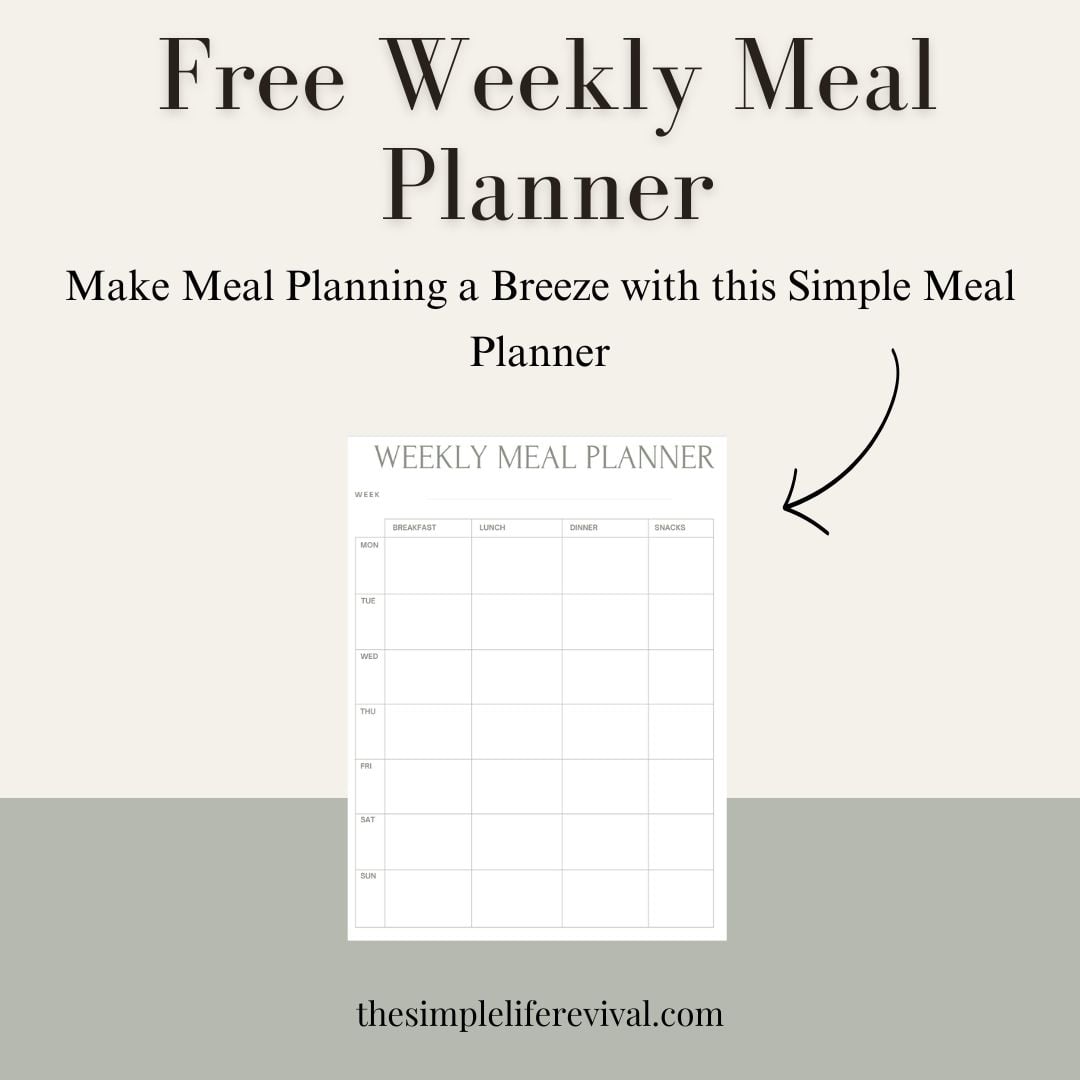
For me, that means grocery shopping once a week and sitting down every Saturday or Sunday afternoon with my planner, a cup of coffee, and a pen.
Try this Weekly Rhythm:
- Saturday or Sunday: Plan meals and make a grocery list
- Monday–Friday: Cook based on your plan
- Thursday night: Use up leftovers
- Friday night: Simple dinner—like eggs, grilled cheese, or a pantry meal
- Saturday: Big breakfast and flexible dinner (use up what’s left)
Personal Tip: I write our meals directly into my paper planner so I can see them alongside our schedule. If Tuesday is a busy homeschool day, that’s a great night for soup in the Crockpot or a pre-prepped meal.
Step Two: Keep a Master List of Simple, Affordable Meals
The key to making this work long-term is not reinventing the wheel every week. I keep a list of family favorites that are budget-friendly and easy to make.
A Few Go-To Dinners in Our Rotation:
- Homemade pizza with Naan bread as crust
- Tacos (beans or meat) with rice and roasted veggies
- Soup with homemade broth and sourdough bread
- Sheet pan chicken and veggies
- Breakfast for dinner. ( could be farmers’ style breakfast or sourdough waffles with bacon on the side)
These meals use ingredients I always have on hand. They’re filling, nourishing, and simple enough to put together even on a tired evening.
Bonus Tip: Try to cook once and eat twice—double a recipe and freeze half or repurpose leftovers into something new.
Step Three: Build Your Meals Around What You Already Have
One of the most important principles when learning how to meal plan simply and affordably is to shop your pantry and freezer first.
Before I write down a single meal idea, I look through:
- The fridge: any produce that needs to be used?
- The pantry: do I already have pasta, rice, or canned beans?
- The freezer: any meat, broth, or frozen veggies waiting to be used?
This helps me reduce food waste and avoid buying what I don’t need. If there’s a lonely head of cabbage in the fridge, I’ll plan a stir-fry or roasted cabbage wedges for one night. If I’ve got sourdough discard, I’ll plan pancakes or English muffins.
Step Four: Simplify Breakfasts, Lunches, and Snacks
It’s not just dinner that needs planning—especially when you’re home all day with kids. But the trick is not to overcomplicate it.
Keep it simple:
Breakfasts:
- Oatmeal with seasonal fruit
- Sourdough pancakes or muffins
- Scrambled eggs and toast
- Yogurt with granola
Lunches:
- Leftovers
- Sandwiches or wraps
- Hard-boiled eggs and raw veggies
- Soups (I make a big pot on Monday to eat all week)
Snacks:
- Homemade banana bread or muffins
- Popcorn
- Apples and peanut butter
- Cheese and crackers
I keep a “meal ideas” page taped to the inside of my recipe binder. It makes grabbing ideas quick and easy during the week.
Step Five: Grocery Shop Intentionally
I mentioned earlier that I shop primarily at Aldi. With limited options in our area, I’ve learned to make the most of what I have, and still keep our budget between $140–$180 per week.
Here’s how I do it:
- Stick to your list. I shop with a paper list and don’t stray unless I see a markdown we’ll actually use.
- Buy the basics in bulk. Flour, oats, rice, and beans go a long way and cost very little.
- Skip pre-packaged snacks. Instead, I make muffins, banana bread, or no-bake energy bites at home.
- Buy what’s in season. If apples are on sale, we eat apples. If oranges are high, we skip them this week.
- Use markdowns wisely. Aldi often marks down meat and produce—I plan flexible meals to accommodate deals.
Step Six: Learn to Cook from Scratch (But Keep It Simple)
You don’t have to make everything from scratch to be a good homemaker. But some things are worth learning because they’ll save you money and taste better—like baking your own bread.
I bake all our bread products from scratch, and I’ve found that it not only saves us money, it fills our home with warmth and purpose.
Start with one thing:
- Try making your own muffins
- Mix up a batch of biscuits or pancakes
- Learn to make a simple soup from scratch
These small steps will build confidence and help you enjoy the process instead of feeling rushed.
Related Posts:
Step Seven: Be Flexible and Give Yourself Grace
No plan will go perfectly every week. Kids get sick. You get tired. The eggs burn.
That’s okay.
Learning how to meal plan simply and affordably is about creating rhythms—not rigid rules. Some weeks I stick to my plan perfectly. Other weeks we eat scrambled eggs for dinner more than once.
That’s the beauty of slow living—it makes space for real life.
Slow Down, Plan Ahead, and Nourish Your People
Meal planning doesn’t have to be overwhelming or expensive. It’s about choosing simplicity, thinking ahead, and caring for your family in a way that reflects your values.
When you learn how to meal plan simply and affordably, you’ll spend less time stressed in the kitchen and more time gathered around the table.
And isn’t that the kind of home we all want?
Ready to Start?
Here’s your challenge this week:
- Choose a day to plan meals
- Shop your pantry and fridge
- Make a simple list and head to the store with purpose
- Pick one new thing to cook from scratch
Let me know how it goes—I’d love to hear what’s working for you! And if you found this helpful, be sure to share this post with a fellow homemaker or pin it to your kitchen inspiration board.
You can do this. One meal at a time.
Until Next Time,

